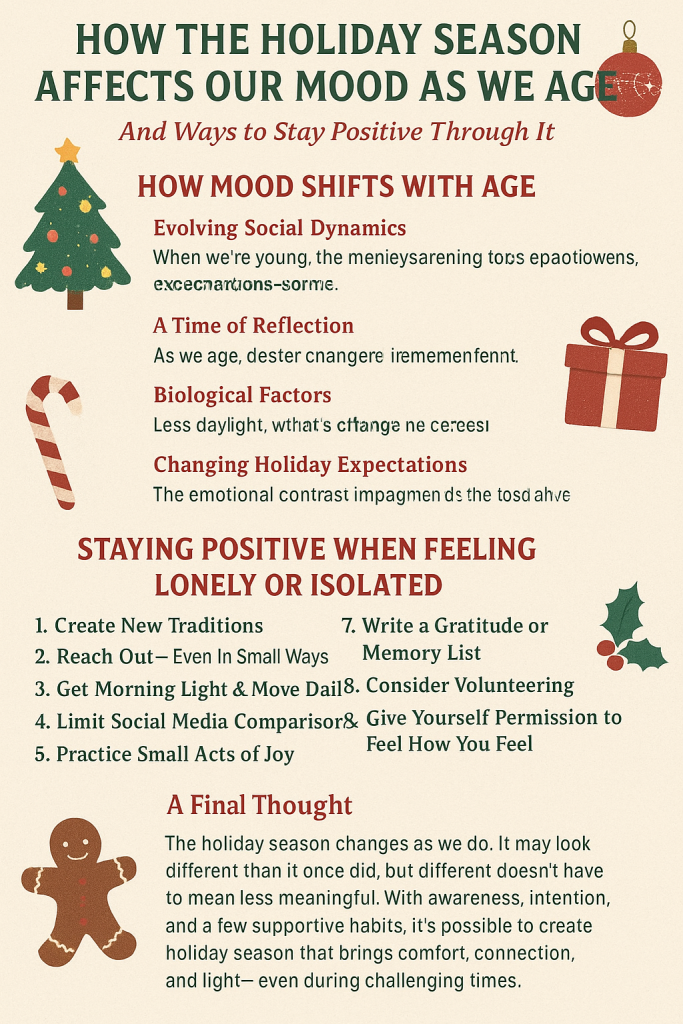
And Ways to Stay Positive Through It
The holidays come wrapped in memories, traditions, and expectations—some joyful, some bittersweet. As we move through different stages of life, our emotional experience of the season naturally changes. Understanding why can help us navigate the holidays with more compassion for ourselves and others.
How Mood Shifts With Age
Evolving Social Dynamics
When we’re young, the holidays often mean large gatherings, excitement, and long-standing family traditions. As we age, those dynamics shift—children grow up, families move, loved ones pass on, and gatherings may become smaller. Even when life is going well, these changes can stir feelings of nostalgia, loss, or loneliness.
A Time of Reflection
The end of the year naturally invites reflection—where we’ve been, what’s changed, and who we miss. While this can bring comfort and gratitude, it can also amplify sadness or stress during a season that often emphasizes happiness and celebration.
Biological Factors
Colder weather, shorter days, and age-related changes in energy levels can influence mood more than we realize. Reduced daylight and disrupted routines may increase fatigue, emotional sensitivity, or feelings of low motivation.
Changing Holiday Expectations
As priorities evolve, many people crave simpler, quieter holidays focused more on meaning and connection than hustle and pressure. While this shift can feel freeing, it can also highlight how different the season looks compared to years past.
The Emotional Contrast
The holidays tend to magnify whatever we’re already feeling. When life feels steady, the season can feel magical. When we’re lonely, stressed, or grieving, that contrast can feel especially heavy.
Staying Positive When Feeling Lonely or Isolated
If the season feels heavier than usual, these practical and gentle strategies can help support your mood:
1. Create New Traditions
If old traditions no longer fit your life, create ones that reflect who you are now.
Ideas include:
- A yearly holiday movie night
- Treating yourself to a special meal
- Volunteering for a cause that matters to you
New traditions can restore a sense of anticipation and purpose.
2. Reach Out—Even in Small Ways
Connection doesn’t have to be big or formal.
- Call or text someone you trust
- Attend a local holiday event
- Join a small group at a library, senior center, or community organization
Even brief interactions can lift your mood and remind you that you’re not alone.
3. Get Morning Light & Move Daily
Light and movement are powerful, natural mood boosters.
- Sit near a sunny window
- Take a short morning walk
- Stretch for 10 minutes
These small habits help regulate mood, energy, and sleep.
4. Limit Social Media Comparisons
Holiday posts often show highlight reels—not reality. If scrolling leaves you feeling discouraged or “less than,” consider reducing screen time and focusing on activities that genuinely nourish you.
5. Practice Small Acts of Joy
Lean into simple comforts:
- Music you love
- Warm lights or candles
- Crafts, baking, or cooking
- Holiday shows or nostalgic movies
Small rituals can provide emotional grounding and comfort.
6. Write a Gratitude or Memory List
Reflecting on meaningful moments, small victories, or people who’ve touched your life can gently shift perspective and support emotional balance.
7. Consider Volunteering
Helping others is one of the most research-backed ways to ease loneliness and boost emotional well-being. Food banks, pet shelters, and community drives often need extra help during the holidays.
8. Give Yourself Permission to Feel What You Feel
The holidays don’t need to be perfect. Letting go of pressure and allowing your emotions to exist—without judgment—often brings relief on its own.
A Final Thought
The holiday season changes as we do. It may look different than it once did, but different doesn’t have to mean less meaningful. With awareness, intention, and a few supportive habits, it’s possible to create a season that brings comfort, connection, and light—even during challenging times.